I lectured this week on the history of retail and the origins of consumer culture. In my talk, I used several clips from some of my favorite scary movies (artifacts of having written and delivered a similar lecture last Halloween). I thought I’d share links to those clips here and discuss how they can serve as waypoints in telling the story of how we became a society of shoppers.
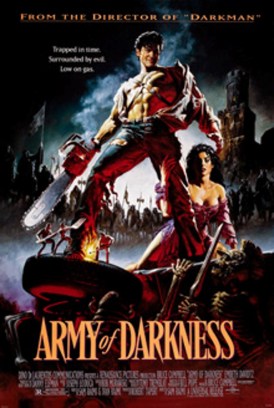
“Shop smart! Shop S-Mart!” – Army of Darkness (1992), dir. Sam Raimi (https://www.youtube.com/watch?v=pFriRcIwqNU)
The historian Patricia Crone writes, “To think away modern industry is to think away an enormous amount of wealth. [….] Preindustrial societies were dominated by scarcity.” Ordinary people during the European Middle Ages weren’t consumers as we understand the term. There just wasn’t enough stuff. I tell my students that they carry around on their person more manufactured objects (stuff made by others for the express purpose of being sold) than most pre-industrials would have encountered in their lifetimes. The production of meager goods took place in the home, but more importantly, the lack of a network by which goods moved and were exchanged meant that medieval peasants lacked the ideological and linguistic equipment to understand markets. The closest we get in the centuries between the fall of Rome and the Italian Renaissance were the trade fairs, held periodically in towns and cities, but even these were still largely fixtures in a barter economy and were not indicative of widespread specialization in craft manufacturing. These marketplaces are the arenas in which career merchants begin to amass wealth and wield greater influence, which in both the West (feudalism) and the East (Confucian social classes) disrupts existing socio-political institutions.
The word “retail” comes from the French, retailler, which means to parse or cut off. Medieval merchants moved small quantities of trade goods from town to town, and as trade networks between continents and cultures expanded, so too did the range of goods offered by merchants in urban marketplaces. New products flowed along the Silk Road and maritime trade routes: porcelain, silk, spices, tobacco, mahogany, coffee, tea, sugar, chocolate.
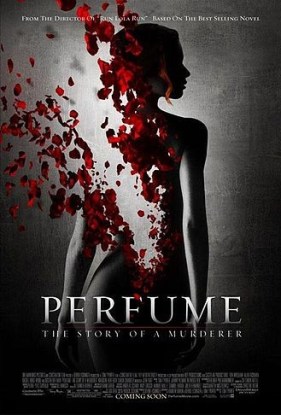
The Early Modern Parisian Market – Perfume: The Story of A Murderer (2006), dir. Tom Tykwer (https://www.youtube.com/watch?v=mJagO4ZtZK0)
The murderer Jean Baptiste Grenouille encounters the range of smells in a market in pre-revolutionary Paris (sorry for crummy quality). The possibility of choice led to a sport of choosiness, and this was particularly true in Bourbon France, an empire centered around fashionable consumption.
Ultimately, industrialization made possible the full flowering of consumer behavior in the West. A river of diverse, affordable goods flowed out of new factories, enabling members of every social class to aspire to self-expression through the stuff they bought. Branding and mass marketing acknowledged a phenomenon that had matured over the preceding century – people found meaning, crafted personal identity alongside their things. Department stores and mail order catalogs in the late 19th century offered everything from dry goods to sex toys, and simultaneously trumpeted the utopian vision of a plentiful, industrial future. They were marble temples, with electric lights and escalators, to the material potential of humankind and our eerily worshipful behavior persists.

“They’re us.” – Dawn of the Dead (1978), dir. George Romero (https://www.youtube.com/watch?v=dyucU5rtIu8)
In an interview, George Romero recounted a trip to a new shopping mall in Monroeville, PA in the early 70s. He noted the network of hallways and hidden corridors and the flat, numb expression that seemed the norm among mall shoppers. Our mindless, shallow materialism may be one of the less catastrophic consequences of the industrial-consumption complex (when compared to environmental degradation and the corporate enslavement of sweat shop nations), but it remains unsettling. It’s tough to imagine a time when the pursuit of material goods was not a structural influence on the ways we lead our lives. It’s important to remind ourselves that the overwhelming desire to express ourselves through consuming is a side effect of the end of scarcity. The past shows us that for most people, for most of human history, this was not the case.
 Dystopamine