
Camus suggested that there was only one worthy question in all of philosophy – should one kill himself. In pondering this and in fleshing out his philosophy of the absurd he channels an ancient story, that of Sisyphus who is doomed by the gods to roll a boulder up a hill only to have it slip and return to rest at the bottom on the verge of his reaching the top. If Sisyphus, in Camus’ conception, believes that this time he will succeed in displacing the boulder, then he is damned. If he recognizes from the outset that his task is futile, then he is damned. This is the absurd predicament in which Camus suggests we all find ourselves – creatures desiring of meaning but finding our existence bereft of it, having been denied true purpose by gods or fate.
Here we find another ancient story, one that we might casually write off as being preoccupied with chivalric courage and the premodern creation of a cult of honor. That’s what my high school English teacher told me anyways. But in Lowery’s retelling of this medieval romance, we find something closer to Camus than to Mallory, or to Chaucer. Gawain is being pressured to grow up. By his mother. By his king. Youthful lust, a wandering spirit, and a lack of conviction keep him from assuming his seat at Arthur’s table. But forces from without, spells and admonitions, will compel Gawain to abandon his own preoccupations and pursue the only currency that matters in his world, honor.
Gawain believes that he is achieving some measure of honor when he accepts the Knight’s challenge. And again when he sets out on his quest. And again when he kneels, neck bared. The ambiguity of the film’s ending is whether or not he believes that it’s possible to get the stone to the top of the hill. Does he believe there is meaning in living an honorable life or is it a fiction that he must subscribe to? Should he let the axe fall?
Arthur is us, the audience. He prefers legends to truth. Before the Knight’s arrival he calls for “myths or cantos” as idle diversion. The round table and its knights have, in this telling, exerted honorable influence over the land, subjugating the Saxons and ravaging the countryside. This is Arthur’s acceptance of his purpose, stone and hill. Morgan/Morgause is a witch, fueled by patrimonial ambition. Winifred is a casualty of cruelty. The scavenger, an agent of it. This is the world from which Gawain has been sheltered and one he, in his quest, navigates in search of honor/purpose.
Now to the Green Knight. In dialogue I can’t recall faithfully, Alicia Vikander’s character explains the Knight and his relationship to the journey Gawain has undertaken. I paraphrase – green is what seeps in when red has faded. As we age, as our passions dull, as we compromise what it seems, in youth, natural to want in favor of those things that are determined for us to be worthy of our ardor, that is the Green Knight, coming to claim what is due.
Camus envisioned two versions of suicide. One – we let the axe fall and obliterate ourselves from a world that denies us something we so fervently desire. Two – we invent meaning where there is none. We go to church. We drink. We love simultaneously knowing and ignoring that oblivion awaits. That stone will just not reach the top. In the Owl Creek vignette, Gawain sees what accepting “honor” looks like. He becomes one of Arthur’s stories: powerful, tragic, and doomed like Arthur himself. On seeing this, he kneels before the Green Knight, ready to die, something the Green Knight either denies him or obliges. What the myth reveals is that it does not matter.
I think this is a film about being seduced by worlds: that of mothers, kings, spirits. Our paths are invariably ones from blue and yellow, when we exist as untested knights, towards the green, the natural diluting and blending of our nascent selves into shapes the world can comprehend and use. And red is absent entirely. It can only ever be the stuff of dream and fantasy as we await our end, all paths converging under the axe of the Green Knight.





 Reginald Bryce was a precocious boy who, at the age of ten, thought he saw a young girl disappear down a rabbit hole in Cheshire. He had been walking along a riverbank on Sunday after church when he was drawn to a voice calling “But wait, Mr. Rabbit.” Reg began to jog through the undergrowth, emerging into a clearing just as a pair of stockings disappeared into the roots of a sprawling willow. He shouted as he ran over, tripping on a clump of weeds and tearing his breeches at the knee. There were no stockings, no girl, and no Mr. Rabbit to be seen so Reg, shaken, limped home. His mother had been sitting at the drawing room window when he came in. He told her about the girl on the riverbank and she tightened her grip on her needlepoint. Thoughts raced through her head of the sanitarium in Oxford or sending Reg to Sumatra with the merchant marine. Instead she whipped him for tearing his trousers and there was no more talk of girls or rabbits. Reginald was apprenticed to a shopkeeper a few years later and married a girl from Aylesbury a few years after that. They had three daughters, Mary, Margaret, and Carol. Carol died of scarlet fever when she was three. Reg bought a share in a grain mill. Once, they took the train to Brighton on holiday. One day, while out walking, Reg fell into the River Higham and drowned. He was seventy-one.
 John and Mary Bishop left London by train in the spring of 1940 to stay with an old widow in the country. John had just turned thirteen and his sister, who cried the entire trip, was nine. The platform had been full of tearful mothers, but Alice Bishop was not a sentimental woman. She handed her teenage son a roll of pound notes and shook Alice by the shoulders and told her through gritted teeth to “stop yer bawlin.’” She didn’t wave. The pair shared a compartment with four other children, two boys and two girls, who politely ignored Mary’s sobbing. The oldest brother, a few years older than John, stared out the window, rising a little in his seat as they passed a muster of soldiers on one of the platforms. “Our dad’s in France,” said the youngest of the girls sitting across from John and Mary. “Where’s yours?” John just shrugged and Mary began crying harder. John fought back tears himself, unwilling, like his mother, to let the others see him cry.
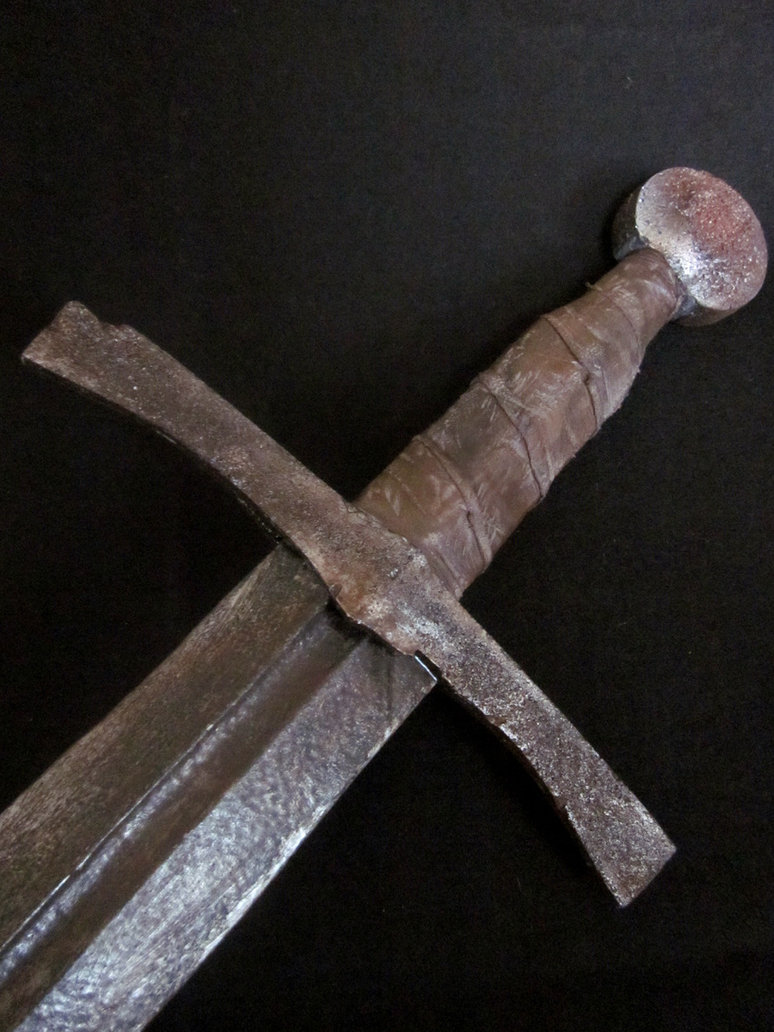 Thomas Tanner lived south of the river in a thatched house with his parents, grandparents, and seven siblings. Tom was the middle child and had just begun helping his father in the vats, dredging goat and cow hides though the solution of salt and potash. His father told him that his hands would soon turn “tanner’s black,” which scared the eight-year-old who already hated the foul smells that clung to him and the burning that lingered in his nose and eyes after the day’s work was done. The priests had commanded that all workshops were to be closed the day of the tournament. Thomas, his father, and his older brother, Peter, who had lost a hand to gangrene after piercing it on a farrier’s nail on the riverbank, went to watch the joust. The crowd pushed and pulled at the small, stinking boy and eventually, Thomas found himself alone, wandering the alleys on the north side of the cathedral. He tried to make his way toward the jubilant cries of the crowd, but the narrow alleys echoed and channeled the sound so that the shouts seemed to be coming from everywhere at once. Eventually, he emerged into the deserted square in front of the church. He watched as a tow-headed boy, a few years older than himself, emerged from the alley opposite and headed towards him. Tom lingered in the shadows, and the boy streaked across the cobblestones towards the gleaming hilt of a sword, standing upright in a stone in the center of the square. The blond boy reached the stone and in one swift motion pulled the sword from it before taking off at a run, back in the direction from which he’d come. Tom continued to wander the streets aimlessly. He found the river sometime after dark and made his way back to his house. It was dark when he arrived. His family had gone to sleep. He never told them about what he saw though there was a good deal of bell ringing and cheering from the far side of the river the next morning. Tom overheard chatter about swords and kings that day around the vats, but he began feeling poorly around noon. His brother led him to a pile of raw goat hides and laid him down on top. His father carried him home at dusk where he died three days later from fever.
 Dystopamine